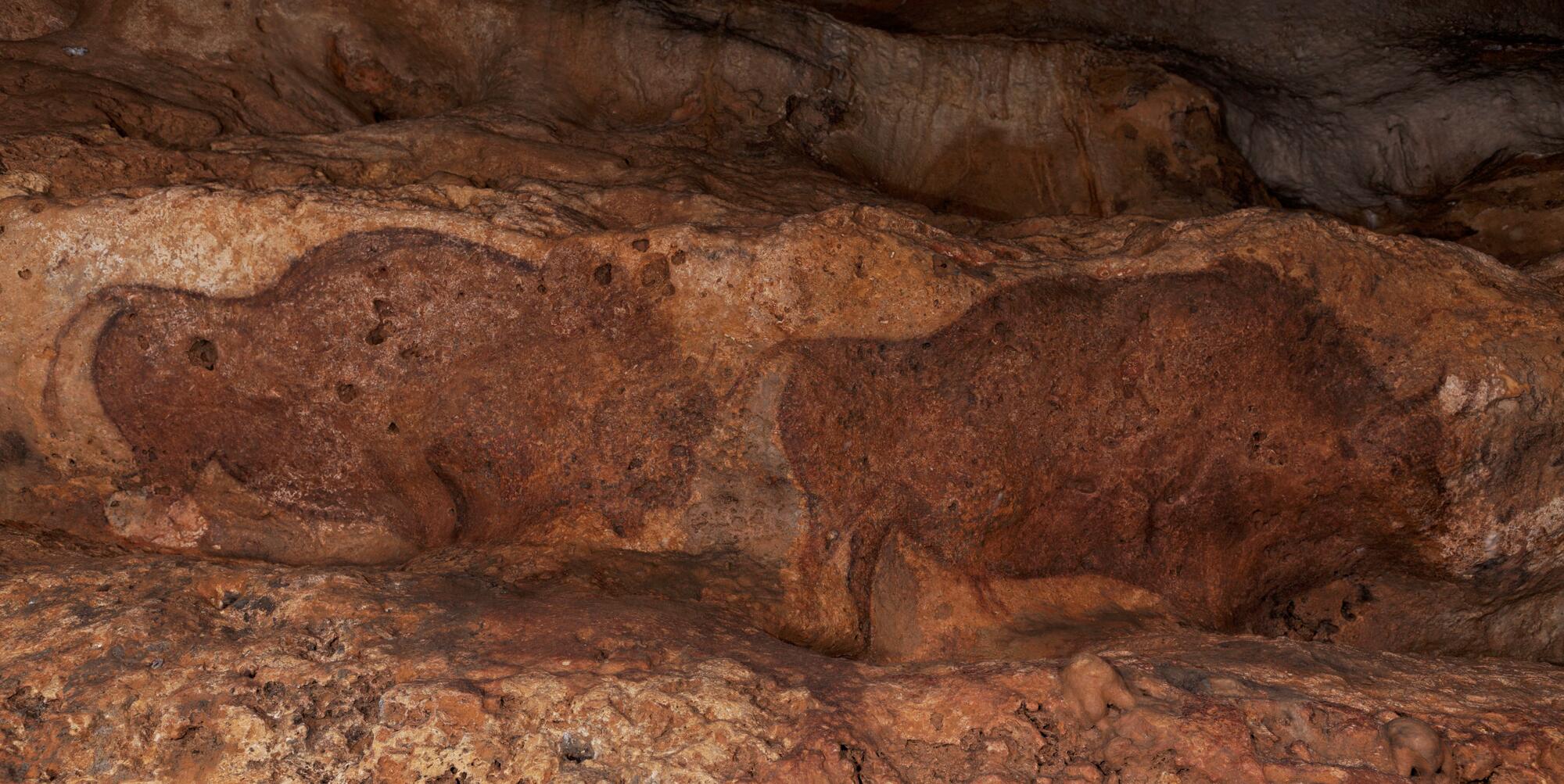
The bison is depicted in an exceptional variety of ways, each with its own significance, on the walls of Font-de-Gaume.
The hyper-bison
The main gallery at Font-de-Gaume features a large number of depictions of the animal, many of which shares the same graphic style, sometimes nicknamed the "hyper-bison". They are drawn in such a way that there is a significant imbalance between the forequarters and the hindquarters. This disharmony, visible in the animal model, has been greatly amplified and exaggerated here, to the detriment of the rest of the body. The withers and dorsal line are dominated by a series of very pronounced convex curves. The animals’ heads are also exaggerated. These are dominated by a tuft or knot of hair on the forehead that is regularly over-engraved and sometimes even grooved.

Bison, main gallery, right wall (© N. Aujoulat – MCC/CNP.)
Superimposed bison
Some of the bison in the cave deviate from the typical depictions. They serve as evidence of the graphic and stylistic diversity of Prehistoric images. Sometimes they stand out from the classical repertoire because of their resemblance to other themes, as is the case here with mammoths. Some of the Font-de-Gaume bison have borrowed their dorsal line and the domed top of their head from the mammoth. These same images are also superimposed on fine engravings of mammoths, as if to reinforce the similarity between the two animals, at least in this area of the cave.
Bison and symbols
These thematic combinations (juxtapositions, superimpositions, etc.) involve both animals and symbols. Here, an impressive painted and engraved bison is directly linked to a tectiforme symbol, depicted on the animal’s flank. The relationship between the two drawings is probably symbolic, although we are unable to determine exactly what it is. They may also have been produced during two different periods, separated by a few years or centuries.
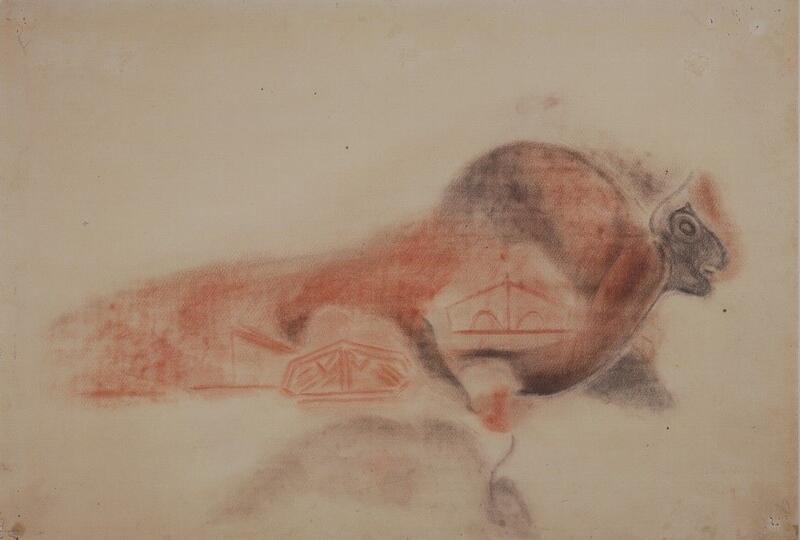
Large polychrome bison with tectiforms, polychrome drawing on paper by Abbé Breuil. Paris, main library of the Muséum national d’Histoire naturelle, Breuil iconography collection, no. 54 1906 (© Bibliothèque centrale MNHN, Paris 2012.)
The herd of bison
The chamber or chapel of the bison is located at the end of the main gallery, just before the terminal diverticulum. This is a small, isolated room with a hemispherical shape. On the walls are a dozen painted and engraved bison, horses and a few aurochs. They stretch across the entire vault of the alcove. Before this decoration was created, the walls were prepared by being scraped and then coated with red dye. With a few exceptions, these animals conform to the classic Font-de-Gaume model, characterised by a strong disharmony between the forequarters and hindquarters. But it is the combination of all these depictions, which are quite similar in their attitudes and dimensions, that raises questions. The ensemble is reminiscent of a herd of animals, as the artists would have observed them in their environment.
Next slide
Previous slide
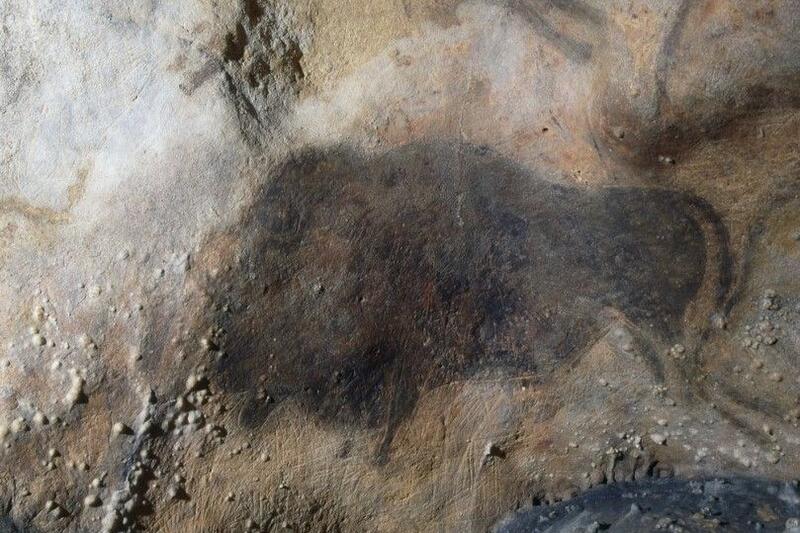
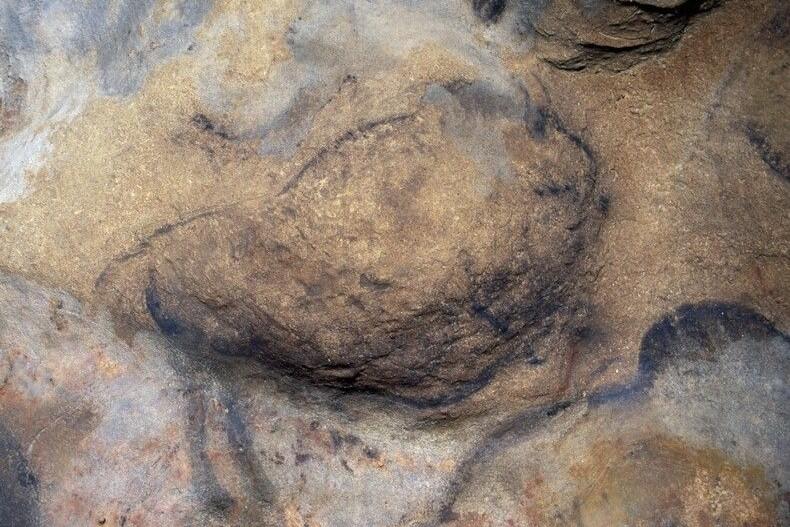
Detail of the Chamber of the Bison (© N. Aujoulat – MC/CNP.)
Detail of the Chamber of the Bison (© N. Aujoulat – MC/CNP.)