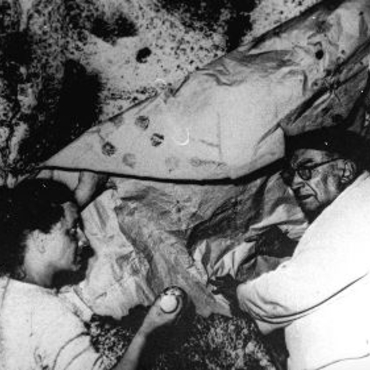

Father Henri Breuil (1877–1961)
Born into a family of magistrates, Henri Breuil was ordained a priest in December 1900. He was then granted a five-year leave of absence to further his scientific education, which led to a professorship at the University of Fribourg (Switzerland) in 1905. In 1910, he returned to France to take up a post as Professor of Prehistoric Ethnography at the Institut de paléontologie humaine (Institute of Human Palaeontology), which he had helped to found. Establishing himself as a leading prehistorian, in 1929 he joined the Collège de France, where the first chair in prehistory was created for him.
His interest in prehistory dates back to 1897. He quickly made friends with many people, including Édouard Piette, Louis Capitan, Denis Peyrony, Émile Cartailhac, among others. From 1900 onwards, he took part in a number of decisive debates that laid the foundations of modern prehistory. He played an active part in the recognition of cave art and made its study his main research topic. Father Breuil carried out several thousand surveys and published a number of lavishly illustrated monographs. Between 1904 and 1913, he also proposed new chronological frameworks for the Upper Palaeolithic before, in the 1920s, overhauling the chronology of the Lower Palaeolithic and Middle Palaeolithic.

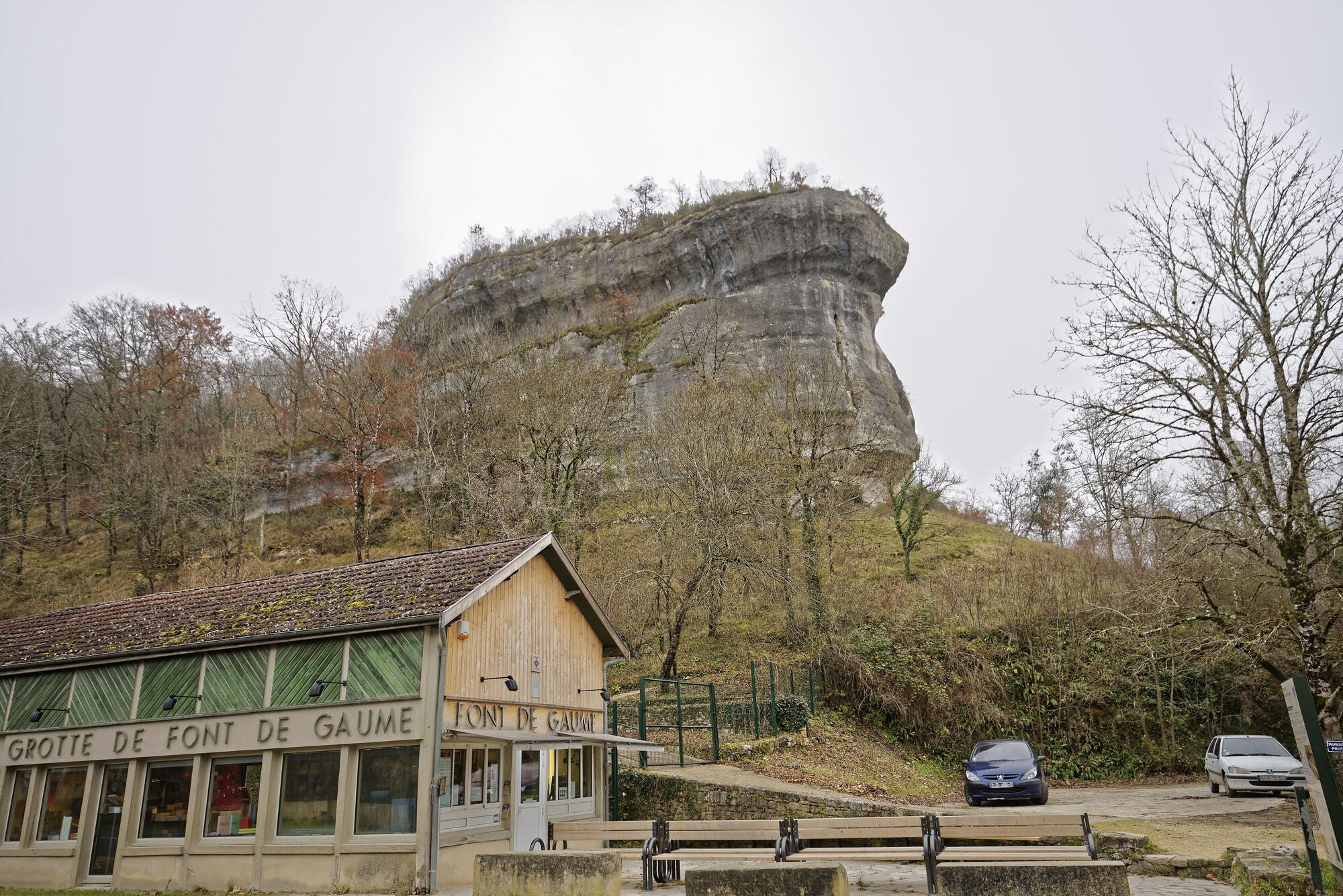
Father Henri Breuil in front of the Font-de-Gaume cave, circa 1901, Saint-Germain-en-Laye, National Archaeology Museum, library, Breuil collection, album no. 1, folio 9 (© MAN / V. Gô.)