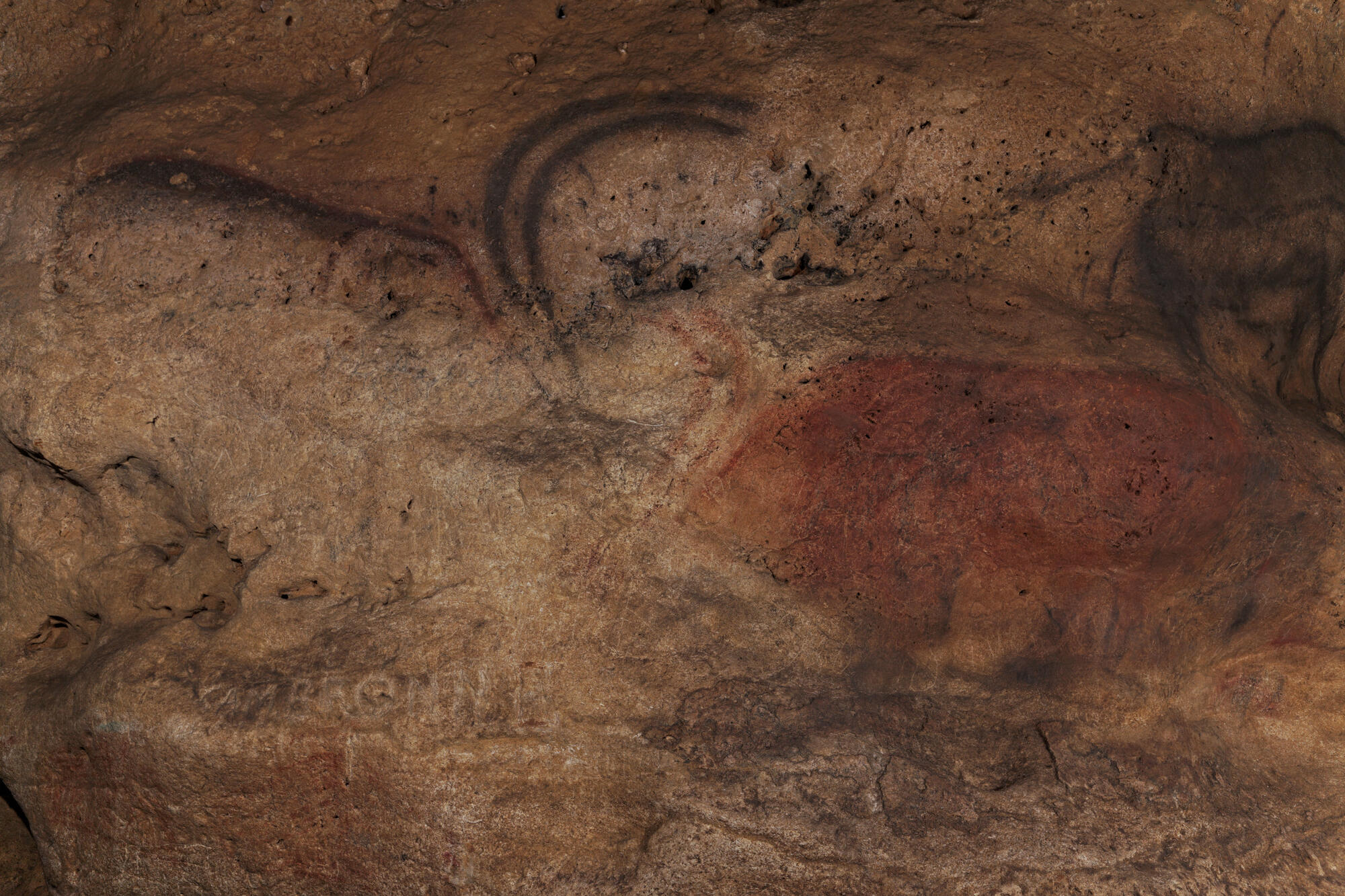

The cave art at Font-de-Gaume is remarkable for the rich colours used by the prehistoric artists. The addition of engraving or mixed techniques and the use of relief enhance the paintings, underlining their exceptional nature.
Polychromy and solid colours
In the Palaeolithic period, the technique of painting, a term that refers to the material, the colouring agents and the work produced, was rarer than engraving, and exceptional when it was polychrome, i.e. using several colours on the same figure. The colour is prepared in advance by grinding and mixing pigments containing iron or manganese oxides with water or oils. It can then be applied with a finger or a brush-like instrument, producing a drawing — known as a linear drawing — or by blowing or using an applicator such as a pad or brush: this is true painting, which uses the solid technique to cover large surfaces. At Font-de-Gaume, it becomes polychrome through the choice of shades of red, brown and black to depict the colouring of coats and distinguish the contours and shape of animals. Sometimes a single colour is used, but the more or less dense application in different areas creates a polychromatic effect. Such highly accomplished works are known only from a few caves: Font-de-Gaume (Dordogne), Lascaux (Dordogne), Altamira (Spain), Fontanet (Ariège), Ekain (Spain), etc.
The mixed technique: relief engraving or preliminary drawing
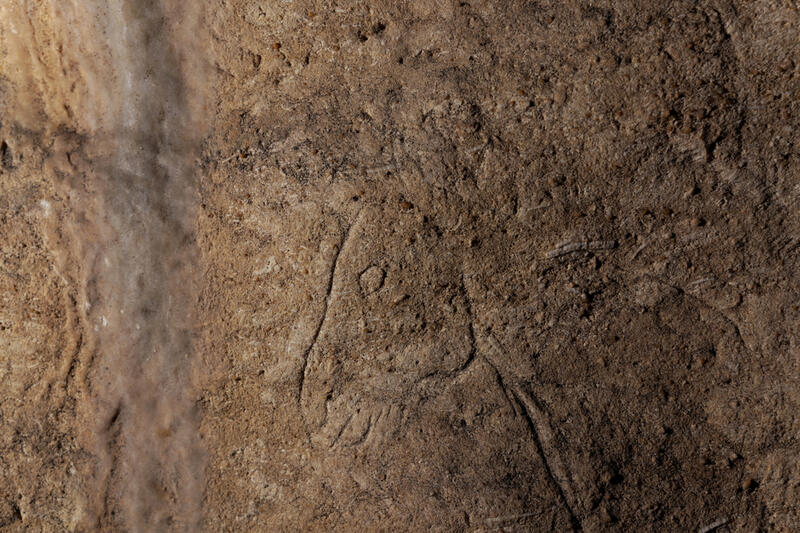
This highly complex mixed technique combines painting, engraving and sometimes bas-relief. In the case of Font-de-Gaume, the engraving sketches out not only the details of the painted animals, but also their contours, creating, in places, relief models. Visible today only in low-angled light, at the time of execution, the engraving created a contrast between the dark, solid colours and the freshness of the light-coloured incised rock, adding another colour of sorts and refining the rendering. When engraving precedes painting, the question arises as to whether a preparatory drawing was made to lay out the figures. Engraving was also used on its own for certain figures, allowing them to be miniaturised.
Next slide
Previous slide
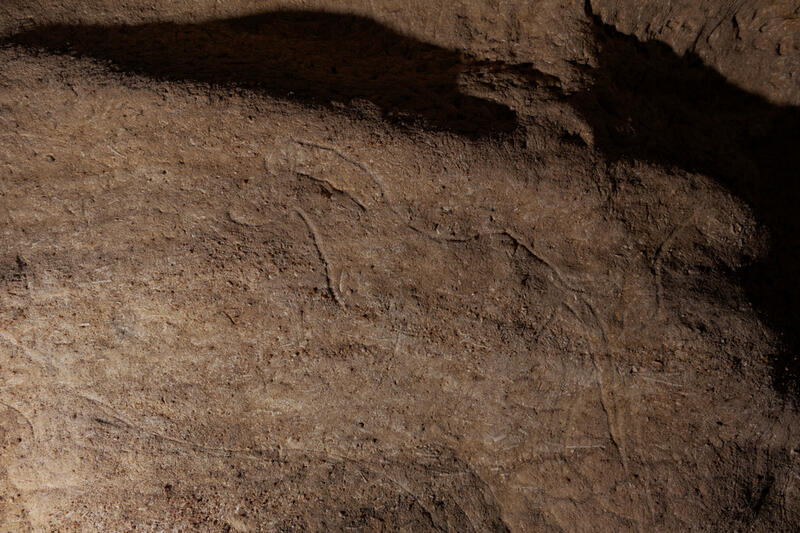
Engraved horse (© Olivier Huard / Centre des monuments nationaux).
Only the engraving remains visible on certain walls after the passage of time.
Engraved horse’s head (© Olivier Huard / Centre des monuments nationaux)
The use of relief
The natural shapes of rock faces have always been exploited by artists: cracks, reliefs and crevices are often reminiscent of a back, a horn, a fleece, etc. This influences where an animal is placed, and is completed by the use of drawing. Elsewhere, it is suggestive of a ground line or frames a figure. The incorporation of the wall also plays a part in the interplay between of the clay layer mixtures that cover it and the pigments that are applied, which introduce a yellow colour or add nuance to the pure pigments.

Black horse, depicted in relief (© Olivier Huard / Centre des monuments nationaux)
