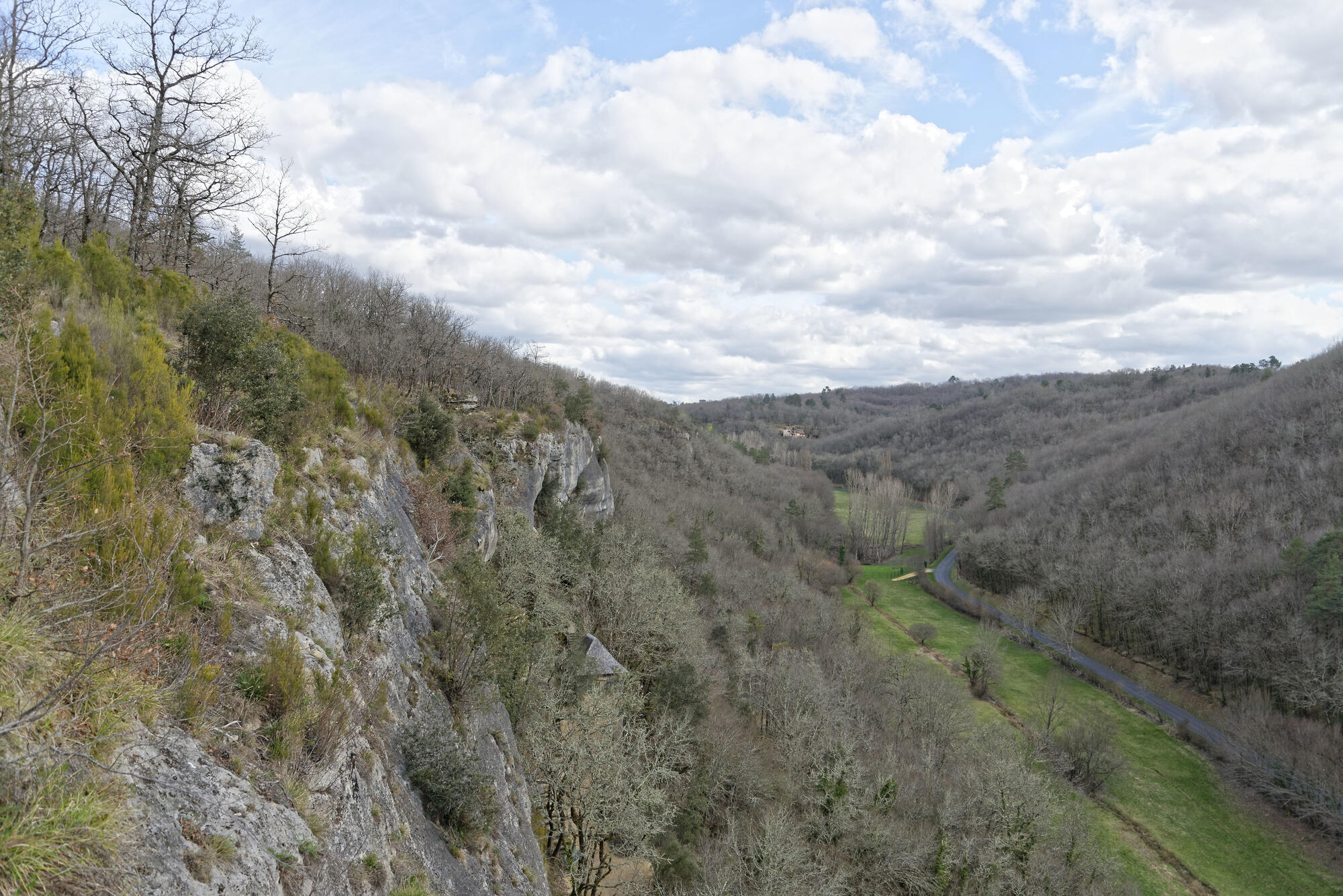
Flora
The study of pollen (palynology) contained in marine sediments enables changes in vegetation to be correlated with marine climate indicators. For Europe’s Atlantic coast, the response of plants to global climate change appears to be rapid. Other high-resolution data comes from the study of continental sediments from peat bogs and lakes. Based on these marine and continental data, four main moments in the evolution of trees (boreal and temperate species) and semi-desert plants (sagebrush and grasses in particular, representing continental steppe or tundra) can be identified: the end of the Last Glacial Maximum (cold and wet) blended a taiga or boreal forest with the semi-desert plants of the continental steppe and tundra; the oldest Dryas (drier and colder) was a complex period marked by numerous changes in vegetation. It was dominated by heliophilous semi-desert steppe plants; the Bølling and especially the Allerød (wetter and warmer) mark the first recolonisation of temperate forest.
Fauna
The warming climate of the Bølling-Allerød also caused a shift in the distribution of animal species. In south-western France, bone remains found in archaeological deposits provide the bulk of the material available for us to understand these changes. Steppe or arctic species (reindeer, saiga antelope, mountain hare, snow vole or snowy owl, etc.) gave way to temperate species. During the Middle Magdalenian, it was mainly large herds of ungulates that were hunted in open arctic or steppe environments. The south-west of France and its mosaic of biotopes can be roughly subdivided into three groups on the basis of hunting records (from a sample of hunting grounds). In the eastern half of the region, covering Périgord, Quercy, western Languedoc and the Pre-Pyrenees, reindeer was often the main game. In the north of the Aquitaine Basin, the saiga antelope was frequently one of the most commonly encountered types of fauna. As for the central and western Pyrenees south of the Landes, the hunting was more balanced, involving reindeer, horse, bison and sometimes deer. Small game were very rarely caught in large numbers, except in a few Mediterranean-influenced sites at which mountain hare and ptarmigan have been discovered. In the Upper Magdalenian, hunting continued to focus on ungulates, but the species evolved. Bison became rare and saiga, which had left the Gironde, were replaced by reindeer and horses. The eastern half of the area under consideration is largely dominated by reindeer and sometimes horses. In the Pyrenees, the opening up of the valleys provided access to new biotopes, such as that of the ibex. In the western part of the region, deer numbers increased, with deer even becoming the dominant species in some areas. At the same time as these ungulates were being hunted, numbers of small vertebrates were increasing. In addition to mountain hares, birds were being hunted more frequently: ptarmigans and choughs in the Pyrenees, and snowy owls on the Aquitaine plain. Fishing data also show that the aquatic environment was used more intensively during this period. In addition to these taxa, smaller animals such as ground squirrels were also caught.