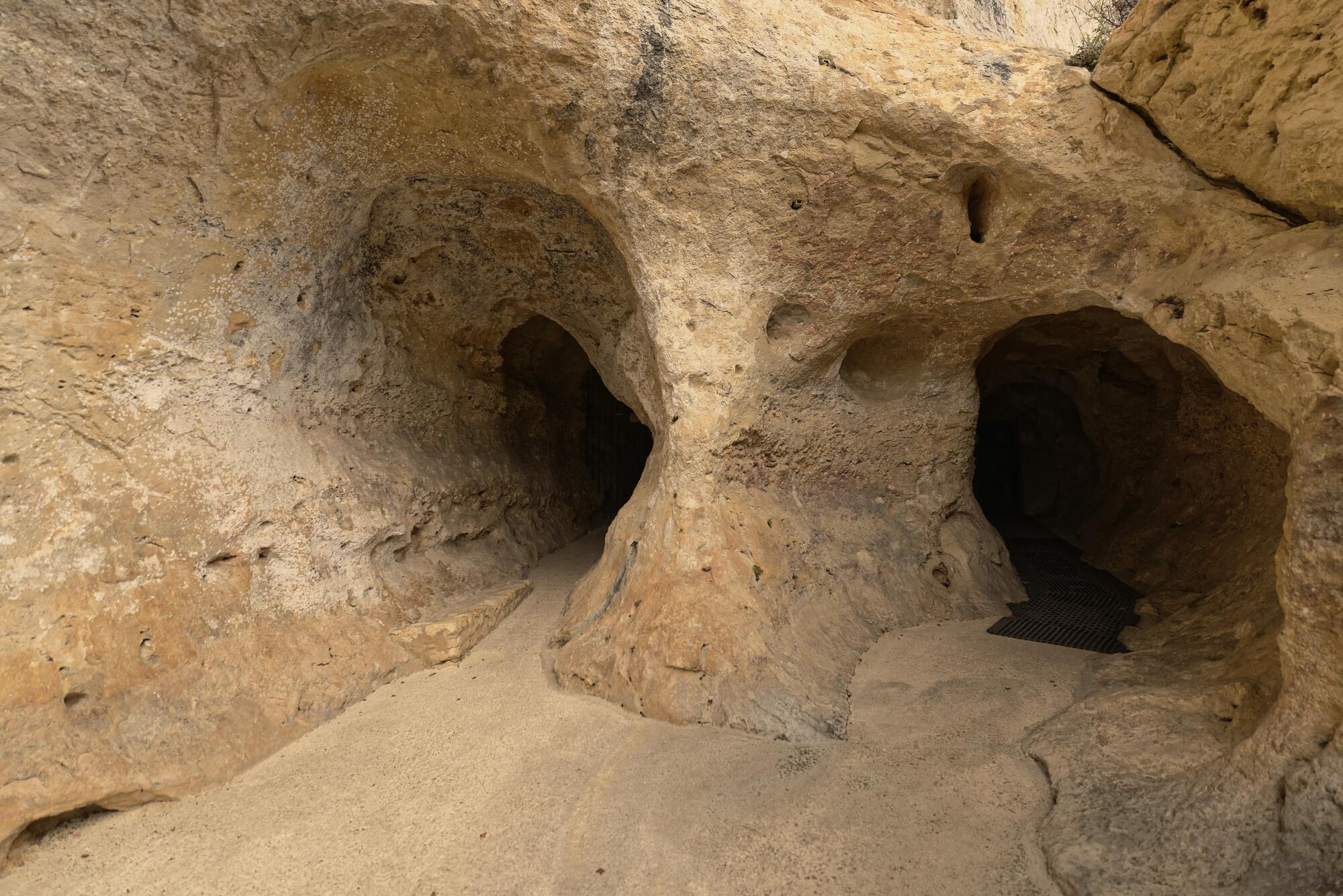
Archaeology at Font-de-Gaume Font-de-Gaume bears the traces of these different occupants and their successive developments. Numerous excavations have been carried out since the discovery of the cave in an attempt to gain a better understanding of its fascinating history based on archaeological information.
Archaeological remains
Humans have been present at Font-de-Gaume from the Mousterian period right through to historic times. They have left behind numerous objects, most of which were found directly on the ground. Evidence from various Magdalenian and Solutrean periods can also be found in the collections. Apart from dyes, it is difficult today to link objects directly to cave paintings. Based on current research, neither sedimentation nor natural infilling seems to have altered the ground level since the frescoes were painted. Only the work carried out in 1950 and 1967 lowered the ground to make certain works inaccessible to tourists. The palaeontological and archaeological levels protected by sedimentation clearly predate the periods in which the cave walls were decorated. Remains that could possibly be contemporary with these periods, particularly those from the second half of the Upper Palaeolithic, were found on the surface of the ground, mixed with more recent Neolithic, protohistoric and medieval objects. Some Palaeolithic tools show signs of wear that were linked to engraving very early on. A dozen pieces with polished or blunt edges have currently been found. As in the Lascaux cave, these are usually simple, angular sections of blade, rather than elaborate tools.
The archaeological context
The concept of context, fundamental in archaeology, refers to all the information associated with the site and its remains: location of finds, original archaeological and geological level, links between remains, etc. This information is gathered at the time of discovery and excavation. Once a site has been used for a long time by humans and has had items taken from it without the necessary precautions, its history becomes very difficult to reconstruct. This is partly the case at Font-de-Gaume, a cave that has always been accessible. It bears the mark of numerous successive developments and, depending on the sector, this history has contributed to erasing the oldest archaeological evidence.