

Although the Font-de-Gaume cave paintings have not been directly dated, a number of characteristic archaeological remains suggest that they belong to certain prehistoric periods. However, it is still important to exercise caution due to the very low level of sedimentation.
Evidence from archaeological remains
Archaeological remains prove that humans were present in the cave at various times from the Upper Palaeolithic onwards. Due to very low level of sedimentation, these objects were often found either on the surface or in a single sedimentary horizon. Only a few distinctive objects can be identified in among this mix.
- The Aurignacian: first period of the Upper Palaeolithic, between 42,000 and 30,000 years ago. During the 1967–1968 excavation, flint, reindeer antler and faunal remains (mainly reindeer) were found in layer 3, concentrated in the Carrefour area. Some of them may be of Aurignacian origin. At present, it is not possible to link elements of the Font-de-Gaume cave art to these early modern humans.
- The Solutréen: rare flint tools are attributed to this period thanks to their characteristic retouching, proving that the cave was in use around 20,000 years ago. It is not possible to link the elements of the cave art to this period of occupation, but this possibility cannot be ruled out.
- The Magdalenian: the last major culture of the Upper Palaeolithic, between 18,000 and 12,000 years ago. Some of the flint tools found in the cave may be Magdalenian, but none are typical enough to be absolutely certain. The cave art at Font-de-Gaume is generally attributed to the middle Magdalenian period, around 15,000 or 14,000 years ago.
- Later presence: human occupation of the cave has continued over time, with remains from the Neolithic, Bronze Age and even more recent periods having been found.
Next slide
Previous slide
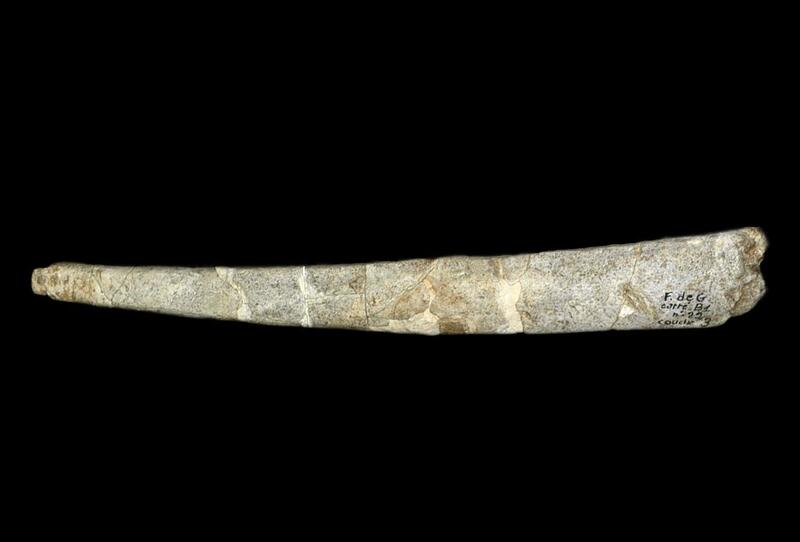
Cut length of reindeer antler (Aurignacian?, Magdalenian?), François Prat excavation, layer 3 (Font-de-Gaume III). Les Eyzies-de-Tayac, National Prehistory Museum. (© Ph. Jugie – MCC/MNP.)
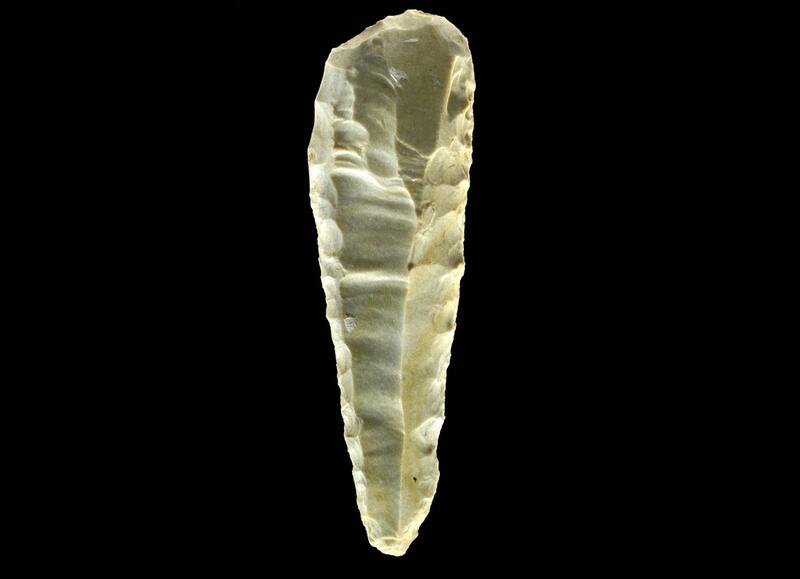
Aurignacian scraper on blade, François Prat excavation, layer 3 (Font de Gaume III). Les Eyzies-de-Tayac, National Prehistory Museum. (© Ph. Jugie – MCC/MNP.)
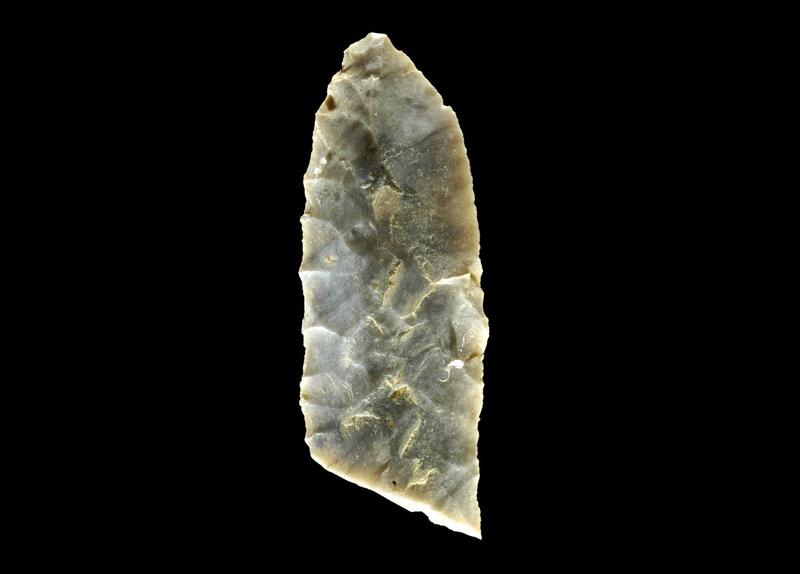
Fragment of a Solutrean retouched piece (willow leaf?), Font-de-Gaume cave, origin unknown. Les Eyzies-de-Tayac, National Prehistory Museum. (© Ph. Jugie – MCC/MNP.)
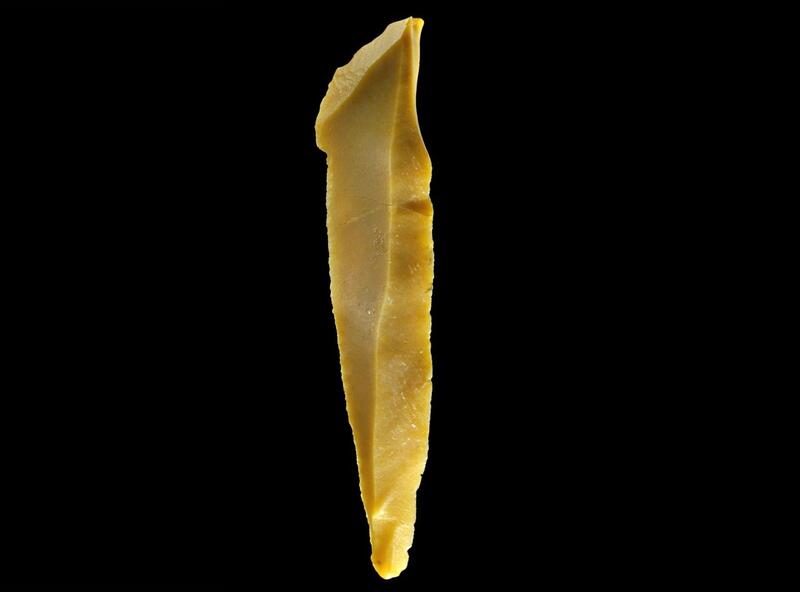
Burin on truncation, possibly Magdalenian, François Prat excavations, layer 3 (Font-de-Gaume III). Les Eyzies-de-Tayac, National Prehistory Museum. (© Ph. Jugie – MCC/MNP.)
Dating cave paintings
The Font-de-Gaume paintings cannot be dated directly, as most of the black pigments used at Font-de-Gaume are manganese-based. Charcoal is the only material that can be dated, meaning that it is necessary to identify marks in the cave that have been created using this material. Bone remains or charcoal found on the floor of the cave can also be dated, but it is more difficult to establish that they are linked to the cave art itself.
It is accepted that the cave art at Font-de-Gaume may have been executed in several phases, concentrated in the second half of the Upper Palaeolithic. Evidence of material culture shows that the cave was permanently accessible and was used for a variety of purposes.
Next slide
Previous slide
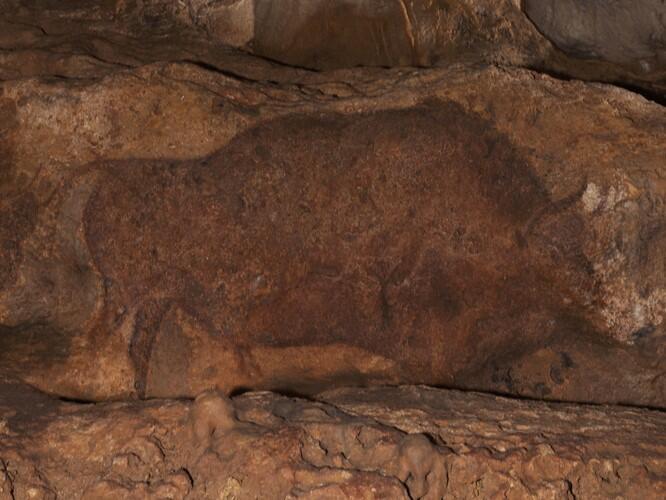
Male bison in the second section of the main gallery. (© Olivier Huard / Centre des monuments nationaux)
This figure is representative of the Magdalenian style.
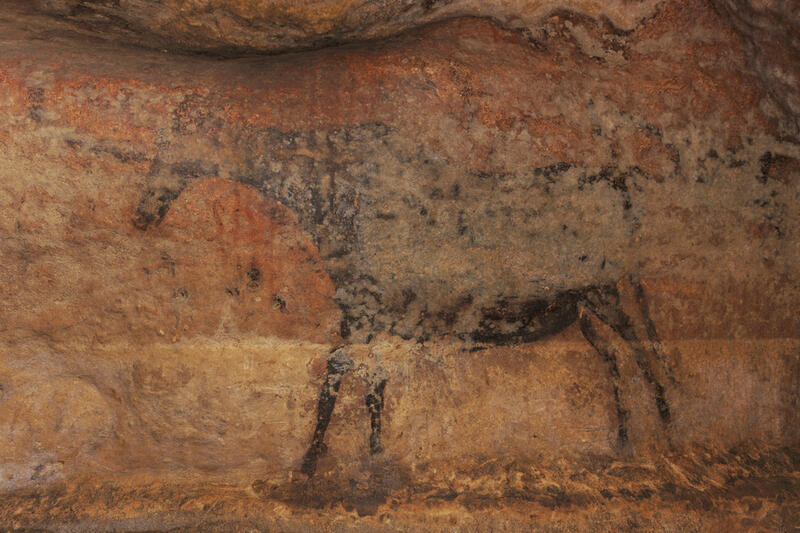
Female auroch at the bottom of the end diverticulum. (© Olivier Huard / Centre des monuments nationaux)
The style of this depiction, which is quite different from that of the bison, suggests that it was created in a different period.
Associated media
Open Media Library