
The origin of salt
Salt is present in seawater at levels of 3%. The geological subsoil contains salt deposits formed by the evaporation of marine waters, mainly during the Triassic period, between 250 and 200 million years ago. These accumulations form banks of rock salt (or halite), which can be several hundred metres thick. In Europe, the main deposits are found in Poland (Wieliczka) and Germany (Stassfurt, in Saxony), as well as in Austria, in the Alpine massif (Salzkammergut). In France, there are two major salt-producing basins in the north-east: one is in Lorraine and the other in Franche-Comté.
The Lorraine basin covers an area of around 200 kilometres in length, from near the Seille valley in Moselle to Champagne. While rock salt formations are buried at a depth of 1,500 m in the west, they almost outcrop in the east, in Lorraine, where they are only 60 m from the surface at Vic-sur-Seille. Lorraine's salt has been mined since the 19th century at the Saint-Nicolas mine in Varangéville (Meurthe-et-Moselle), which is the last remaining active salt mine in France. At Dombasle, near Lunéville (Meurthe-et-Moselle), salt was extracted by dissolving it, injecting fresh water into the subsoil and extracting the resulting brine.
Salt extraction techniques
Archaeology and ethnology have uncovered a wide variety of salt-making techniques, past and present. In fact, there are basically only three ways of obtaining salt:
- By directly mining rock salt deposits that can be accessed from the surface: this is the technique used in mines (such as those at Hallstatt or Hallein in Austria), which also includes mining the sabkha of the Sahara.
- By exposing water with a naturally high salt content to natural evaporation: this is the technique used in ancient and medieval salt marshes on the Mediterranean or Atlantic coasts to exploit seawater; it is also the technique used in Niger to obtain brine from salt springs. They are known as saltworks or natural saltworks.
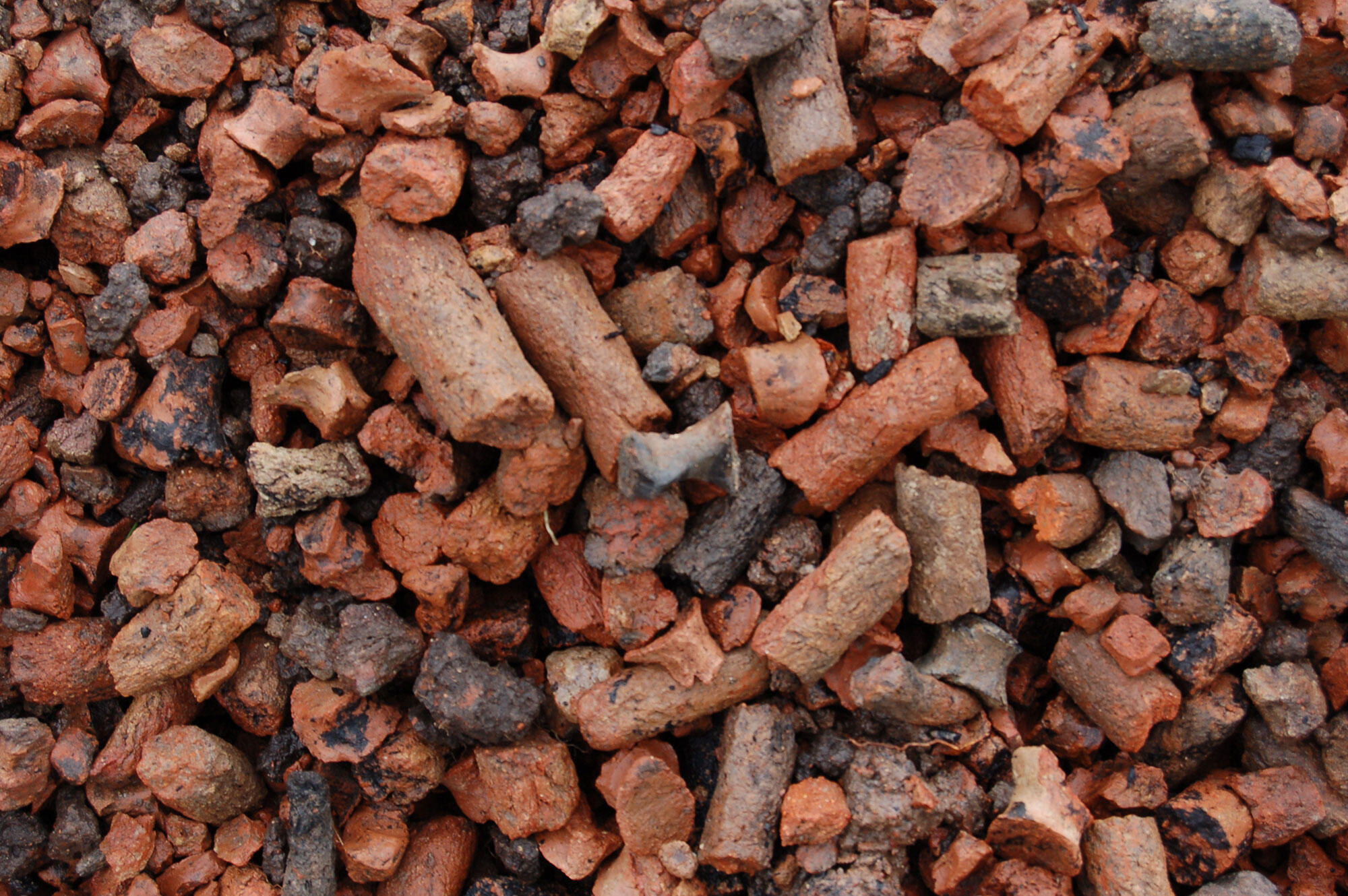
- By boiling brine in furnaces, generally obtained by concentrating salty spring water or by washing salt-containing sediments. This is the technique used in medieval and modern "salt pans" as well as the protohistoric "briquetages" and the artificial saltworks of Manga, west of Lake Chad.
The salt springs of the Seille
A twenty-kilometre stretch of the upper Seille valley, stretching from Salonnes to Dieuze (Moselle), contains numerous salt springs. Through a series of faults, surface water penetrates the ground, where it reaches the top of the Lorraine salt basin, buried between 60 and 80 metres below the surface. This water naturally dilutes the salt rock, transforming it into a brine with a salinity of 90 grams/litre. The pressure of the sedimentary deposits accumulating above these underground pockets of brine causes salt water to rise to the surface of the ground, where salt springs form. By becoming saturated with salt, the surrounding sediments encourage the appearance of halophilic vegetation (dominated by glasswort and saltmarsh rush), which signals the presence of brine at the surface.

