
The saltworkers of the Celtic period (6th century BC)
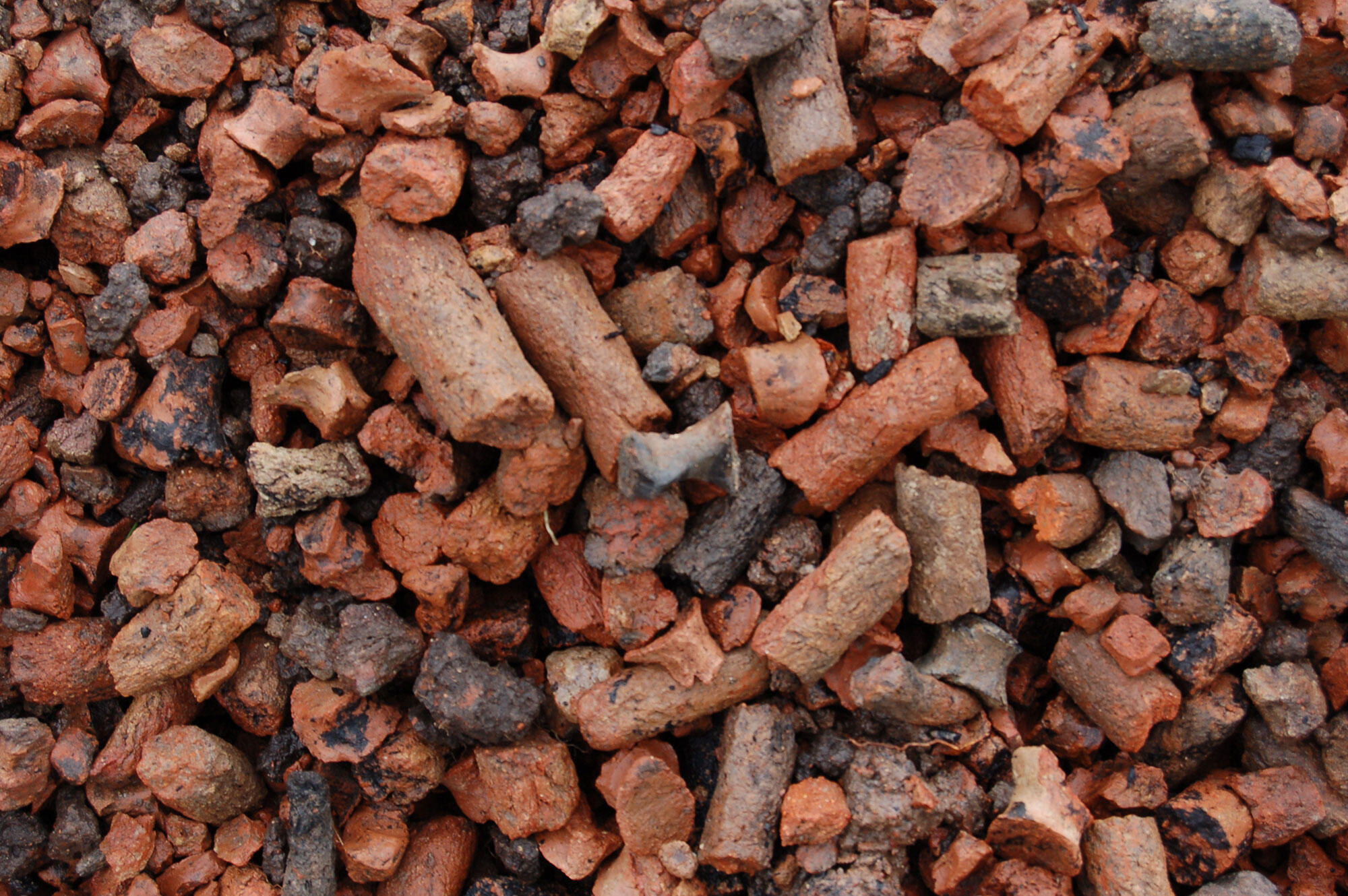
The Early Iron Age period was marked by a boom in the exploitation of salt springs using the technique known as briquetage. The salt was now extracted from the brine by heating it in terracotta furnaces. Some fifteen workshops stretched over more than 10 kilometres, from Marsal to Salonnes (Moselle). These operations could extend over several hectares and include thousands of brine furnaces.
The Salonnes peat bog underwent a second major phase of deforestation, which seems to have coincided with the development of the Celtic saltworks, which were major consumers of firewood. The hydrological environment began to deteriorate under the effects of erosion, which caused the accumulation of sediments loaded with sand and especially clay.
The homes of the Celtic salt-marsh communities were located in the immediate vicinity of the workshops. Activities were dominated by farming, in particular arable farming (wheat and barley) and livestock rearing (cattle, pigs and sheep). Weaving was practised on site. When salt was not being produced, the Celtic saltworkers of the Seille valley worked with iron and crafted small, luxury bronze objects.
Large necropolises belonging to affluent human communities between the 6th and 4th centuries BC developed near the major production areas, in particular in Marsal and Moyenvic.
The Gallic salt industry (2nd–1st centuries BC)
Salt extraction is not currently documented for the period between the 4thand 3rd centuries BC. From the 2nd century BC onwards, salt production on the Seille reached a proto-industrial stage, with production workshops grouped together and concentrated around the three major centres of Marsal, Moyenvic and Vic-sur-Seille.
The oppida period, from the 2ndto the 1st century BC is marked by the development of a major site located at the top of the "Côte Saint-Jean" in Moyenvic, where it is associated with a sacred place. It was at the end of the Gallic period that grouped settlements developed on the site of the large briquetage accumulations in Marsal and Vic-sur-Seille.
Several large enclosures, each around a hectare in size, may have been aristocratic rural estates. Two are located at "En Fatrive" in Vic-sur-Seille and at "Bois de la Marchande" in Salonnes; a third appears to be located under the residential part of the large Roman villa at "Sauvageon" in Moyenvic.

