North Sea coast workshops
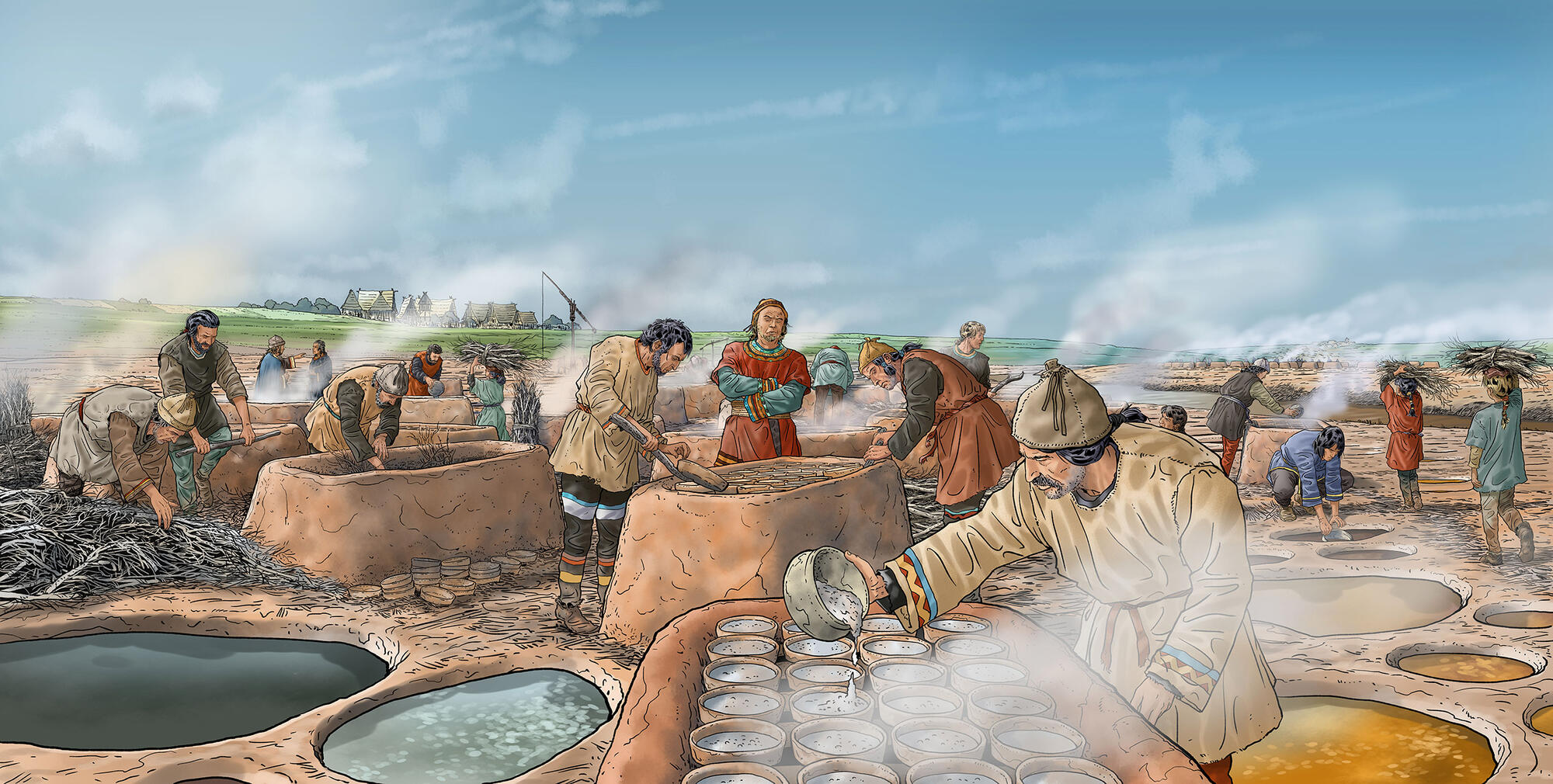
A series of workshops dating from the 7th–5th centuries BC developed in the region stretching from the mouth of the Rhine to around the middle reaches of the Meuse. These production centres from the Celtic period are associated with curious terracotta pieces in a cylindrical half-pipe shape (referred to as Salzhalbröhren by German archaeologists).
The best-known group of workshops is the La Panne site (Belgium), close to which lies the fortified hilltop site of Kemmelberg. This favourable location marks the northernmost point at which Mediterranean imports from the end of the 6th century BC have been found in Western Europe.
The workshop at La Panne produced terracotta pieces in the shape of bars with a circular cross-section, tripod supports and plates with holes in them, the function of which still remains a mystery. However, these components were designed for use with pillar furnaces. It should be noted that the half-pipe-shaped pieces disappeared completely after the transition to the Late Iron Age.
The Dorset salt-making workshops
A number of salt extraction workshops have been discovered in the region between Hampshire and Cornwall, along the southern coast of England. These operations appear to date mainly from the Iron Age (6th–1st centuries BC?). In Hampshire and Sussex, they remained in use until the end of the 1st century AD.
The Red Hills of Essex
First discovered at the end of the 19th century, the Red Hills are accumulations of briquetage up to 2 m thick over an area of around ten hectares. This production waste appears to date mainly from the end of the Late Iron Age. As at the workshops on the French coasts, there was a transition from pillar furnaces (used with T-shaped vessels around 30 cm high) to grate furnaces (particularly at the group of workshops at the mouth of the Thames). However, this technological transition seems to have taken place later than in the workshops on the continent, during the 1st century AD.