

The Châtelliers oppidum in Amboise
Continuously occupied since Neolithic times and fortified on several occasions, the Châtelliers plateau was the seat of the principle town of the Gallic Turon people. Seventy-five years of excavations and research on the site have allowed us to gain an insight into urban life in Celtic Gaul.
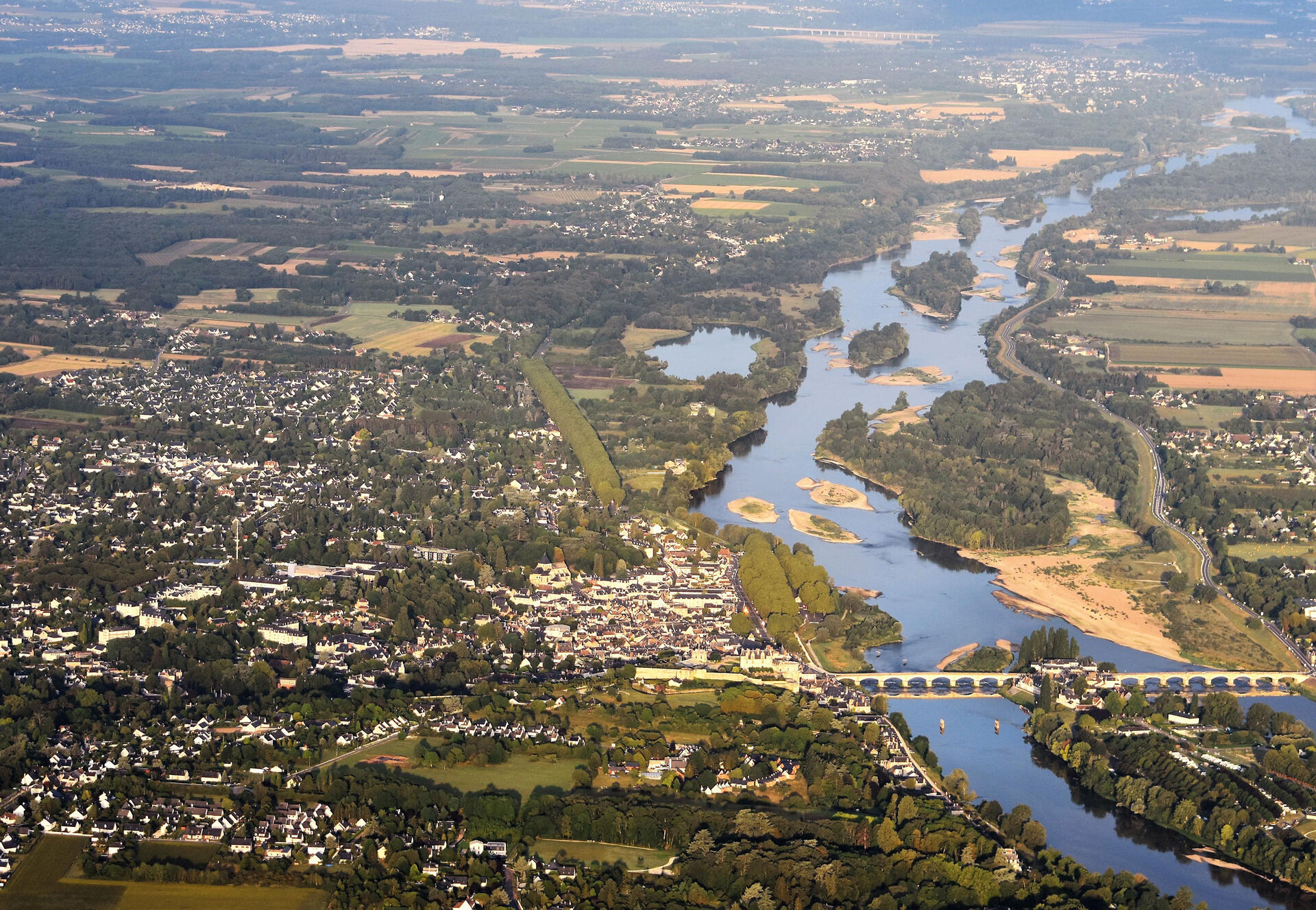
The vast triangular plateau overlooking the confluence of the Loire and Amasse rivers has been mentioned in written sources dating back many hundreds of years due to the elite nature of its inhabitants. Intensive excavations over the last few decades have confirmed the age and privileged nature of the successive occupations here.
A historiographical tradition stretching back almost a thousand years
The ancient town of Amboise was first mentioned in the 4th century AD under the name Ambacia (from the Gallic amba-: river). In the 12th century, in the chronicle "Liber de compositione castri ambaziae", a monk from Tours established a connection between the Châtelliers plateau and the legionnaires' winter camps mentioned by Julius Caesar. This would continue to be asserted for centuries, although there is no evidence to date to confirm this identification.
The 19th century saw interest among scholars grow, with several works on the site being published (notably Étienne Cartier's essays in 1842 and Abbé Bosseboeuf's history of the town in 1897). The beginning of the 20th century saw a slowdown in research, with the notable exception of the seminal text by geographer Roger Dion, who in 1937 drew a parallel between the trajectories of the Bibracte (Mont-Beuvray) and Ambacia sites.

Dozens of digs
In the 1970s, threatened by an ambitious urbanisation programme, the plateau was the subject of emergency excavations carried out by a local team of volunteers led by André Peyrard. For almost 10 years, each dig was followed by another, revealing various parts of the ancient city: temples, ramparts, structures linked to the practising of crafts, etc. Thousands of boxes of artefacts were exhumed without any real resources being made available to allow them to be studied. It was not until the 2000s that operations were undertaken to exhaustively excavate the remains and carry out a full study of them. To date, more than a hundred archaeological operations have been carried out around the Châtelliers plateau — diagnostics and excavations — including around sixty intra muros. These enabled observations to be made over a cumulative area of almost 8 ha, i.e. 15% of the surface area of the site.


A succession of privileged occupations
At the western end of the plateau, beneath what is now the Château d'Amboise, there has been a succession of occupations since the Middle Neolithic, when an initial fortification demarcated an area of around 8 ha. Numerous metal objects and ceramics dating back to the Late Bronze Age provide evidence of long-distance trade (Alpine arc, northern Italy). At the end of the First Iron Age, the spur of land was the site of an elite settlement, documented by the presence of at least one monumental building. There is also a mound 70 m in diameter — Butte de César — whose architectural features allow it to be identified as a tumulus, a princely burial mound from the same period.


During the Gallic period, the plateau was the focus of an urban development project. A new rampart 800 m long brought the site's surface area to 50 ha. Excavations have shown that the entire area was occupied in the 1st century BC. The characteristics of this town suggest that Ambacia was the principle town of the Turon people at that time. In the centre was a public area dedicated to political and religious activities. The thousands of coins unearthed since the 19th century show that this was also a major trading centre.
After the creation of Tours — Caesarodunum, 25 km away — around the turn of the era, the site seems to have entered a slow decline. However, it remained one of the main secondary towns in the area. After the 3rd century, the plateau was largely deserted, with the notable exception of the tip where a fortress was gradually built.

In 2023, some forty researchers involved in the most recent excavations came together to form a Collective Research Project (PCR Ambacia). Their aim is to bring together and standardise the vast amount of documentation relating to this site, the results of the work of many people: volunteers, Afan, Inrap (National Institute for Preventive Archaeological Research), the Indre-et-Loire Departmental Archaeology Department, Eveha and the University of Tours.
Useful links
- "Ambacia Platform": Online GIS with mapping of operations and access to excavation reports
- Archipel: Inrap operations reports
- CD 37 archives: Sadil operations reports
- "Liber de compositione castri ambaziae" chronicle on Gallica