

Kromdraai, the beginnings of the human race
More than 2 million years ago, whilst a distant Australopithecus ancestor had already been making stone tools for several hundred thousand years, the first human populations (genus Homo) and their cousins, the Paranthropus, gradually began to emerge at Kromdraai.

Kromdraai contains many exceptional remains of our distant ancestors — the earliest humans from the dawn of the Quaternary period, their Paranthropus cousins, and their Australopithecus ancestors. Once they have been discovered, laboratory analyses reveal their secrets to us.
Humankind's first steps
Well over 2 million years ago, whilst a species of Australopithecus had already been making tools in Africa for several hundred thousand years, the first humans and their cousins, the Paranthropus, very gradually began to emerge on the continent. Until now, due to a lack of sufficient fossil and archaeological evidence, opinions have differed regarding the scenarios for the emergence of these hominin groups.

Kromdraai, an exceptional site
The fossils discovered at Kromdraai since 2014 offer unprecedented insights. They help to paint a picture of the first humans on the African continent. For the first time, at this site where thousands of hominin and animal fossils associated with tools have been discovered, we are tracing the early stages of humanity's biological and behavioural evolution in southern Africa.
An international team
In the 20th century, since the first discoveries were made by the palaeontologist Robert Broom in 1938, the Kromdraai site had yielded few remains. Further discoveries were made during a Franco-South African expedition in 2002. Then, in 2014, an international team led by Professors José Braga (University of Toulouse) and Francis Thackeray (University of the Witwatersrand) revealed Kromdraai's hitherto unsuspected archaeological potential. Since then, specialists from a wide range of disciplines (biology, ecology, geology, etc.) have been taking turns at Kromdraii to piece together the history of our distant ancestors.
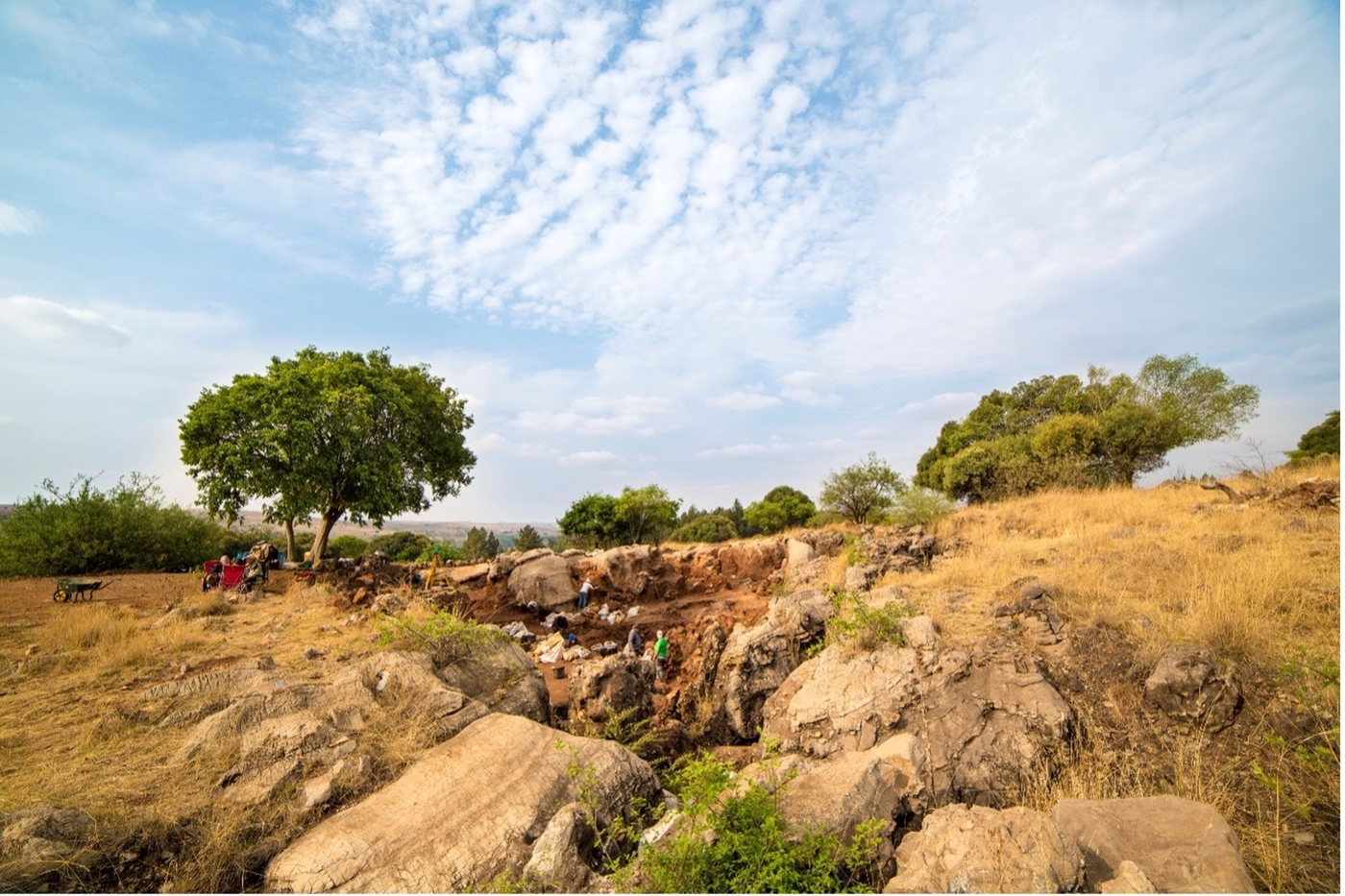

A site featured on the UNESCO World Heritage List
Kromdraai is one of the few hominin sites listed by UNESCO, having been featured under the name “Cradle of Humankind” since 1999 (whc.unesco.org/en/list/915/).
Learn more
- Documentary film (90 minutes) “Kromdraai – Discovering the first human” (French language) (directed by Cédric Robion; produced by Blanche Guichou, Ex Nihilo / Agat Films), “Pariscience 2021” Audience Award (broadcast on France 5 on 25 November 2021)
- Lecture by José Braga at the Collège de France (Symposium “New Perspectives on the History of Humanity”, 2018) (French language)
Useful links
- Toulouse Centre for Anthropobiology and Genomics. Factsheet in English: cagt.cnrs.fr/kromdraai/
- Instagram: jose_braga_kromdraai
- Twitter: @bragaparanthrop