

Nimrud
At Nimrud, the ancient capital of the Neo-Assyrian Empire (9th–7thth centuries BC), an important sanctuary has been uncovered: the Ezida, which contained a library comprising administrative and literary texts. It is the most complete example of an ancient library known to date.
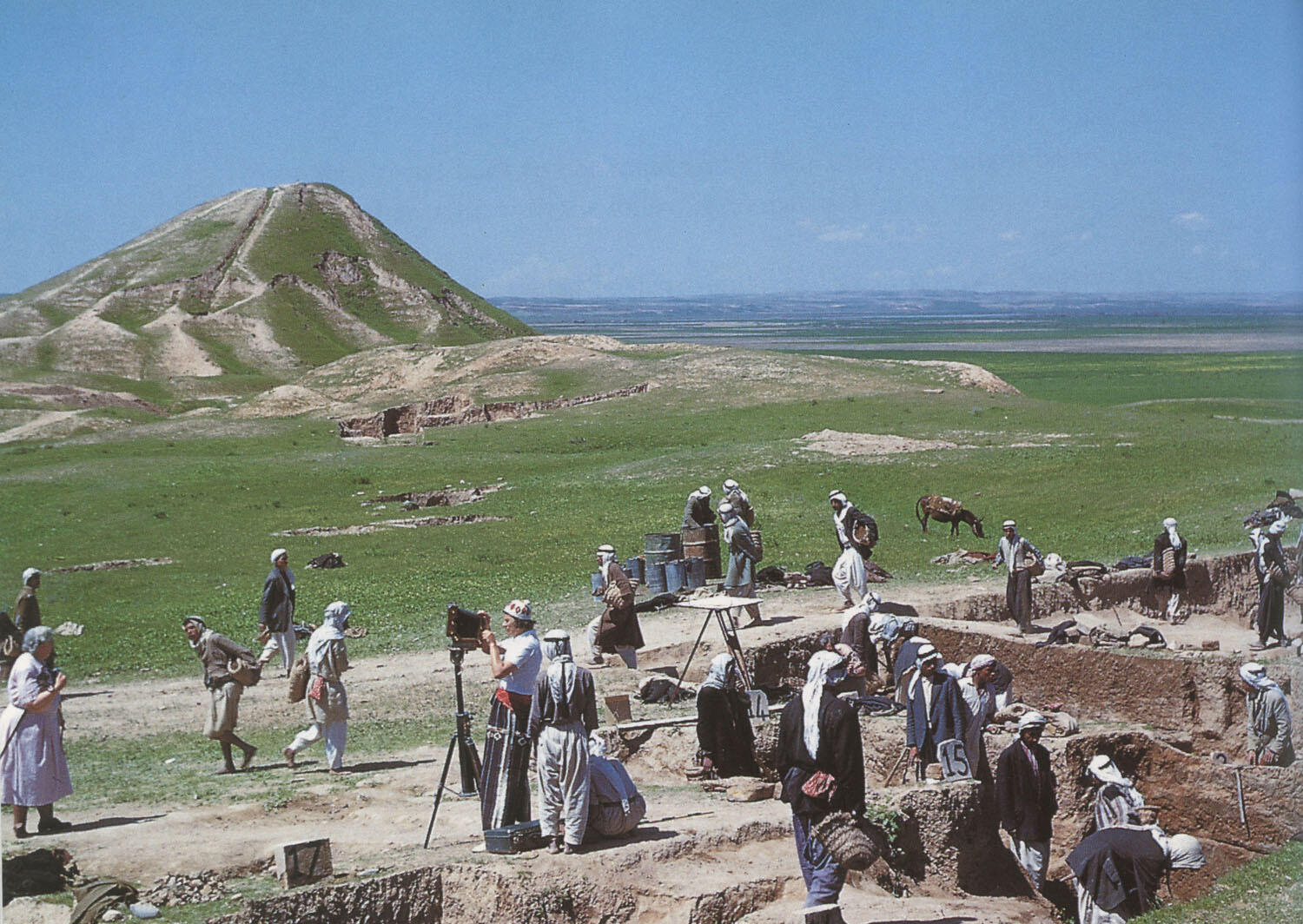
Nimrud, formerly known as Kahlu, became the capital of the Neo-Assyrian Empire at the behest of the ruler, Assurnasirpal II. It was a royal city, boasting palaces and temples, and held major political and cultural significance in the 8th and 7th centuries BC.
The Ezida, ‘the Temple of Truth’
On the acropolis of Nimrud stood the Ezida, an important sanctuary. This building, which has been in the process of excavation since the 19th century, had 35 rooms and measured 85 by 80 metres. In addition to areas dedicated to Nabû, the god of scribes, and to his consort Tashmetu, the building contained a library made up of cuneiform tablets. More than 250 tablets were discovered during the archaeological excavations led by Max Mallowan in the 1950s.
Library of Antiquity
Nimrud Library is one of the clearest and most comprehensive examples of an ancient library discovered in situ. Smaller than those at Nineveh or Babylon, which comprised several thousand tablets, it was a centre of learning, and we know of its buildings, some of the texts and a number of the scribes who produced them.
It was a fairly general library, with no particular specialism in any specific subject area. However, the scribes had drawn a distinction between the administrative and legal texts found in the first courtyard and the literary and scholarly tablets located in the second, opposite the cella of Nabû. A section of the sanctuary was also used by the Assyrian monarchy to store its international treaties.
Bringing the library back to life
The site, which is now inaccessible and badly damaged, provides a fine example of a temple library. Its reconstruction and modelling by the ‘NimRoD, Libraries of Antiquity’ project team from the Labex ‘Past in the Present’ and the CIREVE enable users to explore the sanctuary and learn about the location of the tablets, their catalogue and examples of the main categories of texts.