Emar
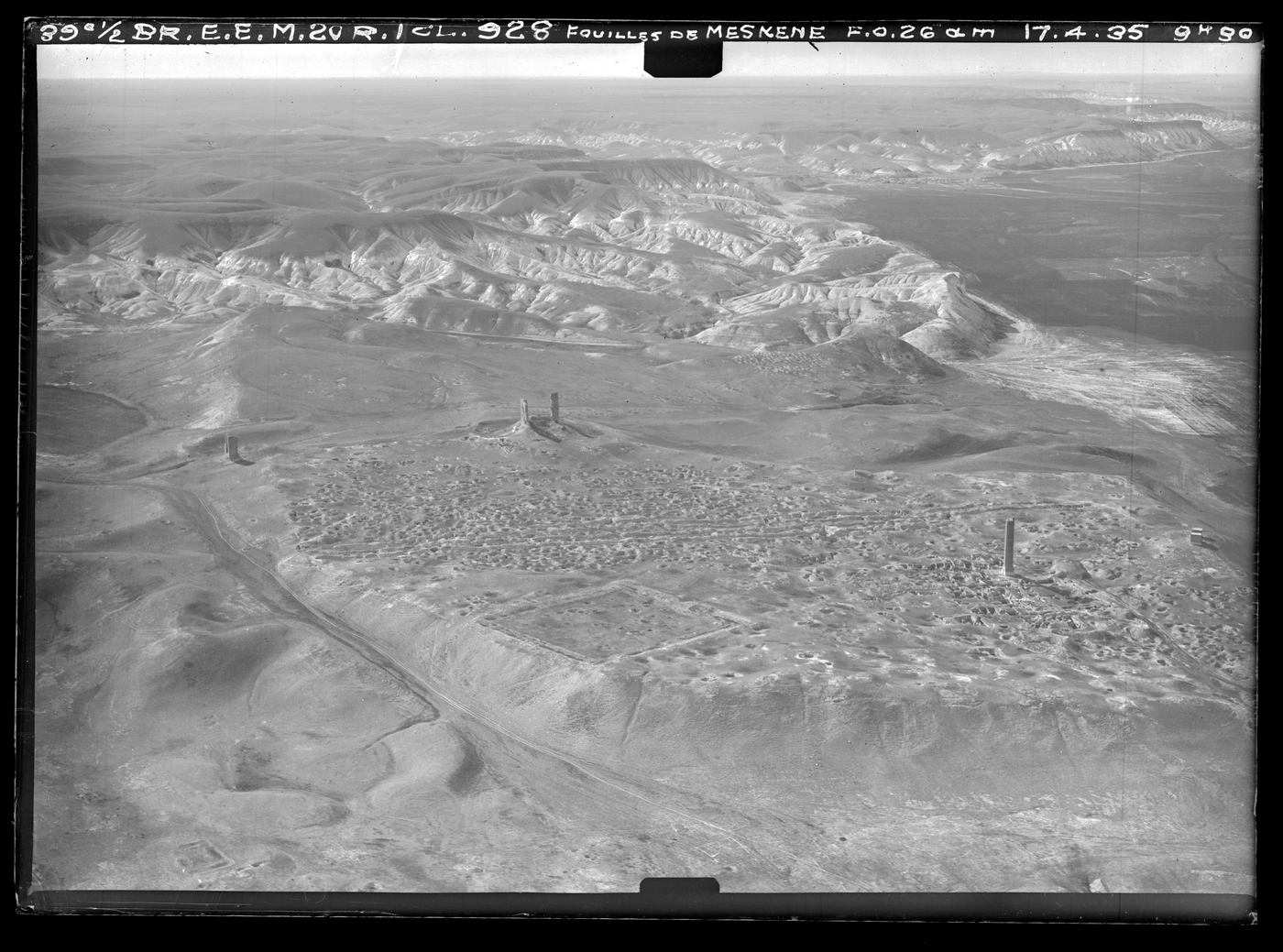
Whilst texts by Mari suggested its existence in the 18th century BC, the city of Emar, rediscovered as part of the international campaign to safeguard the antiquities of the Euphrates, sponsored by UNESCO, turned out to be a new city dating from the 14th century, with urban features that were astonishing for Mesopotamia.
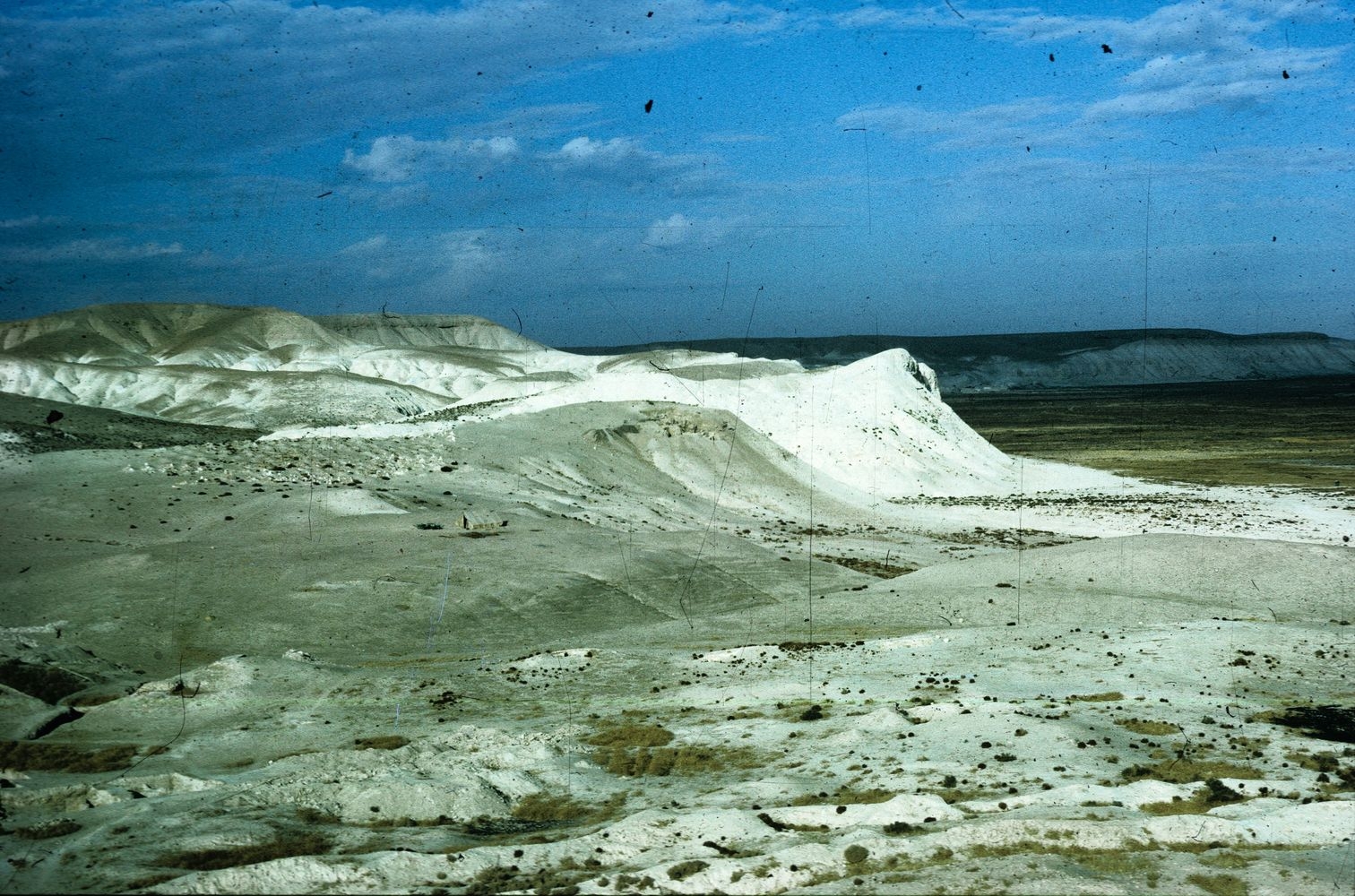
Drawing on geomorphological observations as well as stratigraphy that reveals construction techniques rather than successive levels of occupation, Jean-Claude Margueron attributes this unusual situation to a reconstruction on the plateau following the submersion of the town at the end of the 3rd and beginning of the 2nd millennium, caused by the deepening of the meander that bordered it.
An emergency excavation
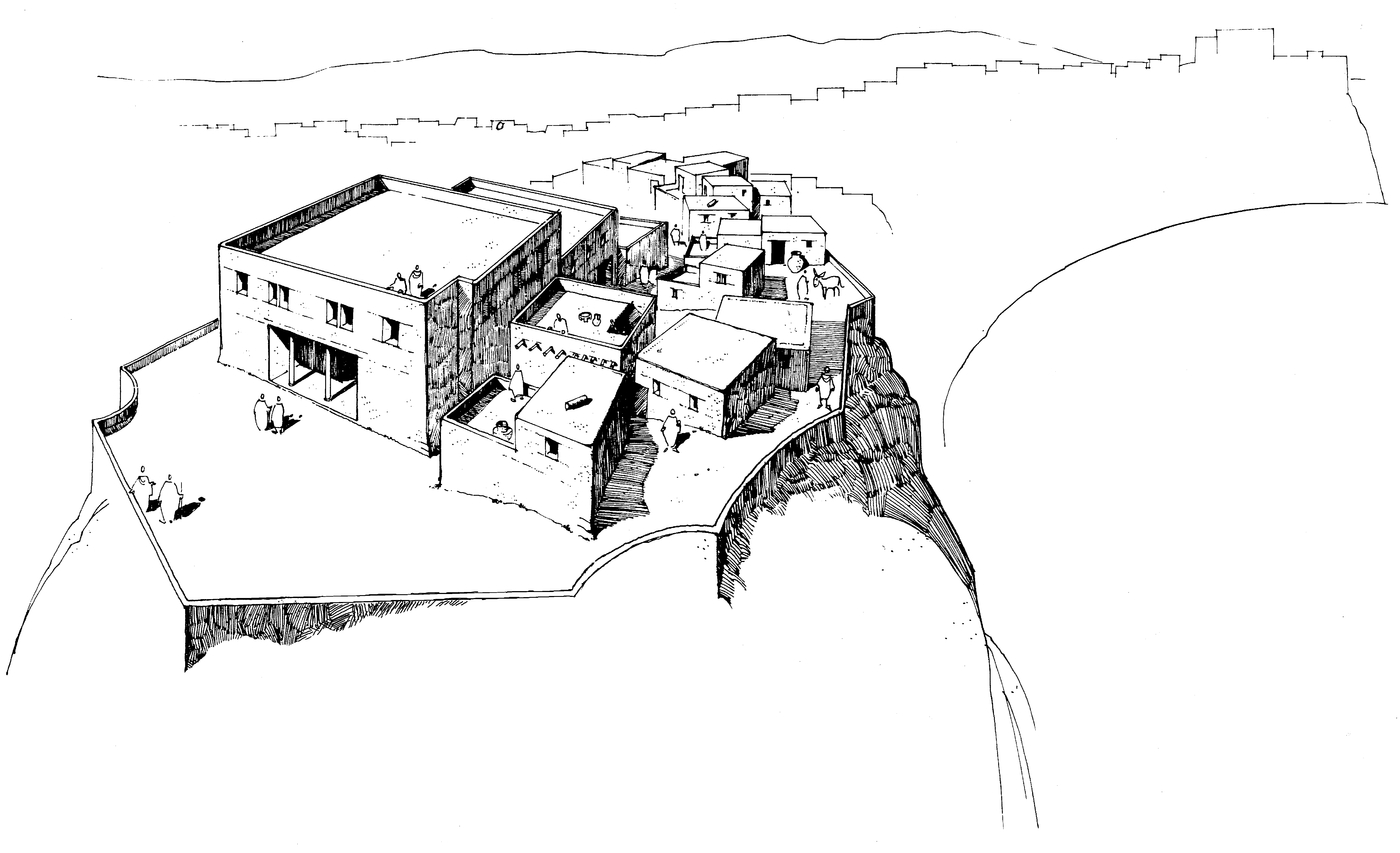
As the waters of Lake el-Assad were eventually set to flood part of the site, each of the six campaigns was intended to be the last. The aim, therefore, was to gather as much essential information as possible as quickly as possible. The site's identity was immediately confirmed by the discovery of clay tablets inside a jar sealed into a wall of the Hilani (the local seat of power). The terraced layout of a city organised in tiers descending from its highest point (the Temple of Baal) to the harbour was recognised as early as 1973.
Massive urban development projects
On the plateau bordering the Euphrates Valley, the site takes the form of a sort of amphitheatre, the regular shape of which was achieved by levelling the bedrock and then filling in the area with imported earth, held in place by massive retaining walls. Even more impressively, the western ravine that isolates it was dug out by human hands.
The land of Ashtata, on the fringes of the Hittite Empire
An outpost in a province conquered by Suppiluliuma I, and part of the kingdom of Karkemish, itself a vassal of the Great King, Emar maintained close ties with the stronghold of Tell Faq'ous, some 10 km downstream, as evidenced by the seal of the ‘Great Charioteer’ (Hittite commander-in-chief), which was already known in Emar.
Religion and art
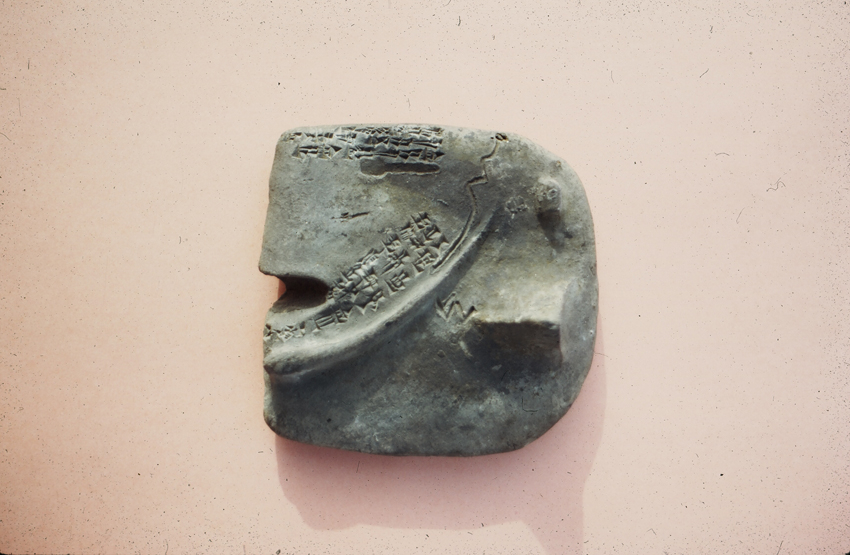
Among the more than 800 texts that have been unearthed, particularly in the scriptorium of the Temple of the Soothsayer, particular note should be taken of the descriptions of rituals and the practice of divination through the examination of animal entrails (haruspicy).
The town was burnt down around 1187 during the destruction that marked the end of the Late Bronze Age. The ruins of the destroyed city were disturbed by the digging of graves during the Roman and Islamic periods. The artefacts from the flourishing Late Bronze Age are every bit as impressive as the prestigious finds from coastal cities such as Ugarit. Following the decision by the Syrian government to share these artefacts as a token of gratitude for participation in the rescue campaign, a collection of nearly 900 objects is now housed in the display cases and storerooms of the Louvre Museum's Department of Oriental Antiquities.
Overview of the mission
Under the direction of Jean-Claude Margueron, six excavation campaigns took place at Meskéné/Emar (between 1972 and 1976) and one at Tell Faq'ous (in 1978). The main findings were presented in preliminary reports, archaeological studies and exhibitions (Aleppo, National Museum; Paris, Palais de Tokyo; and a symposium on the Middle Euphrates held in Strasbourg in 1977, followed by the publication of the proceedings). The Sumerian-Akkadian texts were published by Daniel Arnaud, whilst the Hurrian and Hittite texts were published by Emmanuel Laroche, Mirjo Salvini and Marie-Claude Trémouille. The final publication of the material, Recherches au pays d’Aštata EMAR III, is currently being printed at the BAH; the volume on archaeology and architecture is in progress, under the oversight of Jean-Claude Margueron.